Kitchen Life School

Mukesh Kumar
| 14-03-2026
 · Lifestyle Team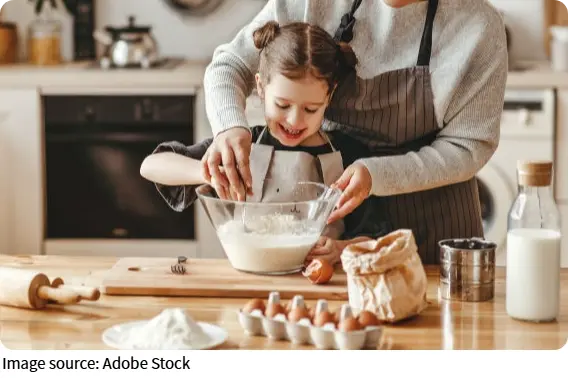
Many families believe the kitchen is a dangerous place for children. With fire, hot pans, and sharp tools around, parents often prefer to keep kids far away.
But what if we look at the kitchen from another angle? Instead of a risky space, it can actually become a warm and practical classroom for growing up.
When children join us in simple cooking activities, they learn much more than how to prepare food. They build independence, develop responsibility, and improve their hands-on abilities. The process of mixing ingredients, shaping dough, or helping prepare a simple breakfast teaches real-life skills that cannot be learned only from books.
If we are willing to relax our expectations and allow children to explore step by step, the kitchen can easily become a place full of laughter, learning, and family connection.
Starting Small: Safe Ways for Kids to Join
Many parents worry about children entering the kitchen mainly because they imagine dangerous tools and heat. However, participation can begin with very safe and simple tasks.
For very young children, the kitchen experience can start with sensory exploration. While we cook, a child can sit nearby and play with metal bowls, wooden spoons, or measuring cups. Pouring rice or beans from one container to another can keep them happily busy. The sound of clinking bowls and the feeling of different textures help develop their senses while allowing them to feel included in family activities.
As children grow older, we can introduce easy food preparation steps. For example, dough is a great starting point. Kneading dough feels like playing with clay for kids. We can give them a small piece and let them shape it freely. During this process, we can first teach basic habits such as washing hands and keeping the workspace clean. These simple lessons help children understand that cleanliness is the first rule in cooking.
Letting Go of Perfection
Sometimes the real reason parents keep children out of the kitchen is not safety, but the fear of mess. Spilled flour, cracked eggs, or uneven shapes may make the kitchen look chaotic. But learning often happens through trial and error.
When children experiment, mistakes are part of the process. A child pouring batter may create funny shapes instead of perfect circles. Instead of correcting every detail, we can simply enjoy the result together. A pancake shaped like a hedgehog can still taste wonderful.
Accepting imperfection encourages children to stay curious and confident. If we expect them to perform like adults from the beginning, they may quickly lose interest. A relaxed attitude helps them enjoy learning and gradually improve their skills over time.
Weekends are often the best moment to try this. With more time available, we can cook together without worrying about small messes. Cleaning up later can also become part of the learning experience.
Cooking Teaches Real-Life Skills
Inviting children into the kitchen is not only about preparing meals. It is about teaching them how daily life works.
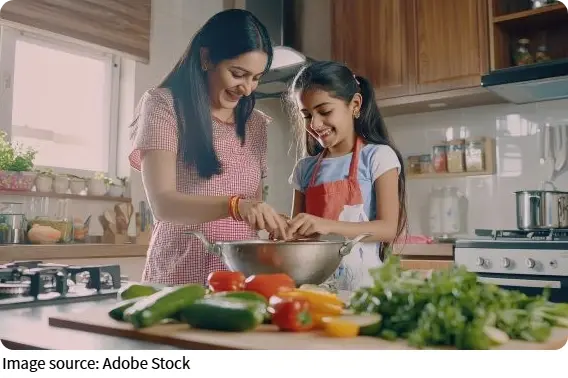
When children help wash vegetables, measure flour, or mix ingredients, they begin to understand where their food comes from and how effort turns ingredients into a meal. These experiences build a sense of responsibility.
Cooking tasks can also become family teamwork. One person measures dry ingredients, another mixes liquids, and the child watches carefully for bubbles forming on a pancake to know when it is time to turn it over. Through these small steps, children learn patience, observation, and cooperation.
These lessons are valuable for both boys and girls. Every child benefits from understanding how to care for daily life.
Early Practice Builds Independence
Many parents handle every household task themselves because it seems faster and easier. While this may save time at the moment, it can make children overly dependent in the long run.
For example, feeding a child may appear convenient, but learning to eat independently is an important step. Similarly, cleaning up toys or helping with dishes teaches responsibility and organization.
When children start helping early, they gradually become more capable. Teaching them simple tasks such as rinsing plates or putting away utensils might require patience at first, but over time it greatly reduces the workload for parents. More importantly, children understand that household responsibilities belong to everyone in the family.
Understanding Safety Through Experience
Many parents believe that keeping children completely away from tools and heat is the safest choice. In reality, learning how things work is what truly builds safety awareness.
At a young age, children can watch us prepare food and observe how tools are used carefully. They learn that cutting requires steady hands and attention. As they grow older, we can gradually allow them to try simple tasks with proper guidance and age-appropriate tools.
Children often become more careful when they feel trusted. When we explain clearly which parts require attention and why, they begin to respect the tools instead of treating them like toys.
This guided experience helps them develop a natural understanding of caution and responsibility.
A Warm Classroom at Home
Dear Lykkers, the kitchen does not have to be a forbidden zone for children. Instead, it can become one of the most meaningful learning spaces at home.
By inviting children to participate in cooking, we give them more than practical skills. We give them confidence, independence, and joyful memories of working together as a family. From kneading dough to preparing simple meals, each step becomes a small lesson about life.
When we allow children to explore, make mistakes, and try again, the kitchen turns into a place filled with warmth and growth.
Perhaps next time we cook, we can invite the little helpers beside us. Who knows? The simple act of cooking together may become one of the most valuable life lessons we share.