Colorful Colony Chatter

Mason O'Donnell
| 12-08-2026
 · Animal Team
Hello Lykkers! Imagine walking through a sunny countryside landscape and noticing a flash of turquoise, yellow, and orange resting on a tree branch. That colorful visitor may be the European bee-eater (Merops apiaster), one of the most eye-catching birds found across Europe and parts of Asia and Africa.
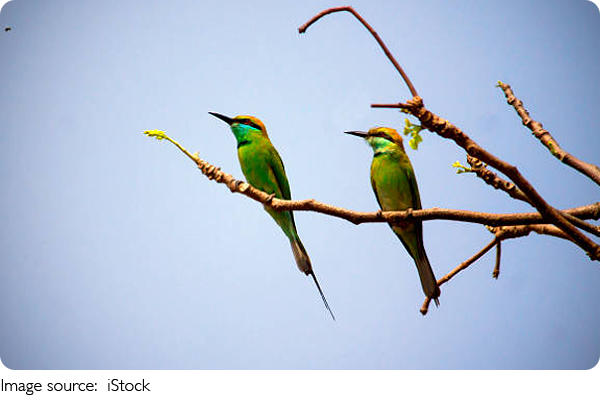
A European bee-eater sitting on a tree is not simply enjoying a quiet moment. The branch is often a strategic location where the bird watches its surroundings, searches for insects, communicates with its group, and prepares for its next quick flight. Let’s discover eight fun facts that make this bird a true wonder of the natural world.
1. The Tree Branch Is a Perfect Hunting Spot
European bee-eaters often choose high branches, fences, or other exposed places as observation points. From these locations, they can easily watch the sky for flying insects.
When a bee, wasp, or dragonfly passes nearby, the bird quickly takes off, catches its prey in mid-air, and usually returns to the same perch. This hunting style makes the tree branch an important part of its daily routine.

2. It Has One of Nature’s Most Beautiful Color Combinations
The European bee-eater looks almost like a bird painted with bright tropical colors. Its feathers include shades of green, blue, yellow, chestnut, and red. Its colorful body makes it easy to recognize and has made it a favorite subject among wildlife photographers.
These colors are also important for communication, especially when birds are choosing mates or interacting with members of their colony.
3. It Does Not Eat Only Bees
Although its name suggests a diet focused on bees, the European bee-eater enjoys a wide variety of flying insects. It commonly feeds on wasps, beetles, butterflies, and dragonflies.
When it catches a stinging insect, the bird returns to its perch and uses a clever technique. It strikes the insect against the branch to remove the sting and venom before eating it safely.
4. It Is a Champion Long-Distance Traveler
European bee-eaters are migratory birds. Many spend the breeding season in Europe before traveling thousands of kilometers to Africa for the winter.
A bird resting on a tree branch may have completed an incredible journey across different landscapes and climates. Their migration shows impressive endurance and navigation skills.
5. It Enjoys Living in Groups
European bee-eaters are social birds and often gather in colonies. Seeing several of them sitting together on branches creates a colorful and lively scene.
These groups help birds stay connected through calls and movements. Their social behavior also provides opportunities for cooperation during breeding and raising young birds.
6. Expert Insight: A Bird That Reflects Environmental Changes
Dr. Wolfgang Fiedler is a German ornithologist and the director of the Bird Migration Station at the Max Planck Institute for Animal Behavior, where he studies bird migration and movement patterns.
Experts studying migratory birds like the European bee-eater highlight that changes in climate and habitats can influence migration timing and distribution. The species’ expanding presence in some northern areas of Europe has been linked by researchers to warmer conditions and changing environments.
7. Its Voice Helps Keep the Group Together
The European bee-eater may be famous for its appearance, but its calls are equally interesting. These birds use soft, rolling sounds to communicate while flying or resting together.
When a flock gathers on tree branches, their calls create a unique natural soundtrack that helps individuals remain connected.
8. It Plays an Important Role in the Ecosystem
The European bee-eater is more than a beautiful bird. By feeding on many types of flying insects, it contributes to the balance of natural ecosystems.
Its presence also provides valuable information for scientists studying biodiversity, migration, and environmental changes.
A Colorful Reminder From Nature
A European bee-eater resting on a tree branch represents beauty, skill, and survival. Behind its bright feathers is a clever hunter, a remarkable traveler, and an important member of the natural world.
For Lykkers who enjoy watching wildlife, spotting this bird can be a magical experience. A simple moment of seeing a colorful bird on a branch can open the door to discovering the fascinating stories hidden in nature.